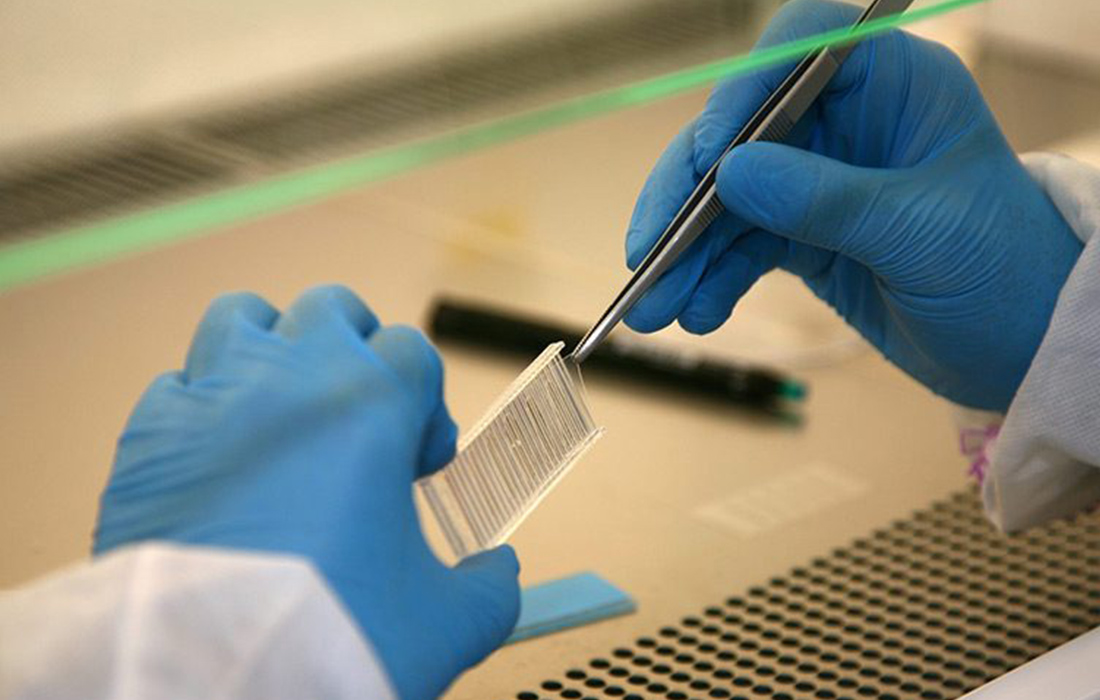



Microfluidic Sperm Sorting Chips (Microchip Technology)
Microfluidic sperm sorting chips are specifically engineered to isolate morphologically superior, highly motile spermatozoa with minimal DNA fragmentation from semen samples, entirely avoiding damaging physical centrifugation.
Conventional sperm preparation techniques rely on density gradients and centrifugation, which can generate reactive oxygen species (ROS) and induce structural DNA damage. Microchip technology mimics the natural physiological journey of sperm cells through the female cervical and uterine channels, providing a biomimetic and stress-free sorting environment.
How Does the Microfluidic Chip Work?
During natural conception, only the strongest sperm successfully navigate through micro-grooves within the reproductive tract. The microchip recreates this exact micro-environment through sub-millimeter channels:
-
The untreated semen sample is introduced into the micro-channel entry port.
-
Chemotactic and rheotactic dynamics enable only high-vitality, mature sperm with optimal genetic integrity to swim through the micro-barrier toward the collection chamber.
-
Dead, fragmented, immature, and immotile sperm are naturally filtered out.
Laboratory outcomes confirm that the proportion of morphologically healthy sperm with intact DNA can increase from approximately 45% to over 98% following microfluidic filtration.
Clinical Applications and Benefits
Male-factor subfertility accounts for roughly one-third of all infertility cases worldwide. In assisted reproductive technologies (ART), particularly Intracytoplasmic Sperm Injection (ICSI) and Intrauterine Insemination (IUI), successful fertilization depends heavily on sperm quality.
-
Superior Fertilization and Blastocyst Rates: Utilizing undamaged sperm significantly optimizes embryo quality and blastocyst formation.
-
Reduced Miscarriage Risk: Bypassing sperm with elevated DNA fragmentation reduces the likelihood of early embryonic arrest and subsequent pregnancy loss.
-
Dual Applicability: Sorted sperm can be seamlessly deployed in both IUI (insemination) and IVF/ICSI cycles.